Tails in a box
An unfinished Pi Zero project to make downloading and installing Tails easier.
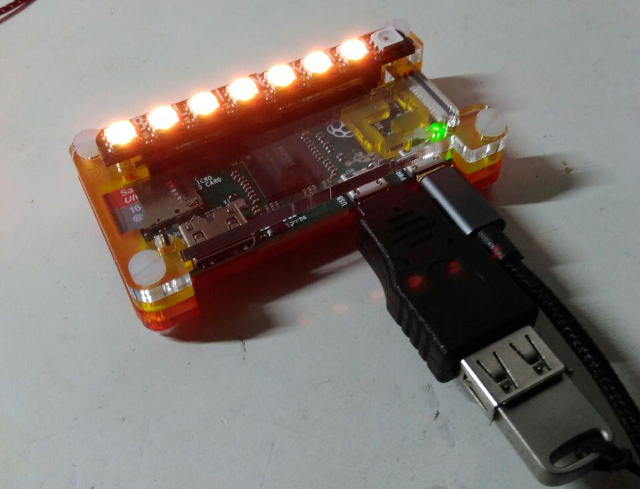
image is of a early prototype, this work is unfinished
After noting the technical ability required to download and install tails and the possibility that a person may be tracked at that stage I decided to create a project that would try and make this easier for the person wanting tails. The person wanting tails would then only have to trust the maintainer of the box (or whoever installed and left it). The guidelines I set myself were to make it low cost, non-suspicious hardware that and that the usage by the person wanting tails must be painless.
Materials:
- Pi-Zero
- USB OTG adapter
- Internet access / Wifi for intital setup
- Micro-USB cable
- USB Power supply of at least 1A to be safe
- USB Pendrives of atleast 2GB
Optional:
- Blinkt (for a progress bar)
- HDMI screen and Mini HDMI to HDMI cable (if you aren’t comfortable with terminal)
The project as the studio later described it
Tails is an amnesic operating system designed to leave no trace and route all traffic through Tor. It’s one of the most effective tools available for people who need real privacy — journalists, activists, people in dangerous situations. The problem is getting it. Downloading Tails from a home or work connection creates a record. Installing it correctly requires technical confidence most people don’t have. The barrier sits right at the point where it matters most.
Tails in a Box is a hardware device that removes that barrier. Plug in a USB drive, wait for the progress indicator, walk away with a correctly installed Tails USB. No download history, no technical steps, no configuration. The device handles everything: verifying the image, writing it correctly, indicating completion.
The build uses a Raspberry Pi Zero — cheap, common enough to be unremarkable, small enough to be inconspicuous. The optional Blinkt LED strip gives a visual progress bar without needing a screen. Total component cost is low enough that multiple units can be left in accessible locations without significant expense.
The project sits at the intersection of the security training work and physical hardware — the idea that access to privacy tools shouldn’t require a technical background or a traceable connection.
Built with: Raspberry Pi Zero · Python (image verification and write automation) · Tails OS · Blinkt LED progress indicator · USB OTG
Code: github.com/ixt